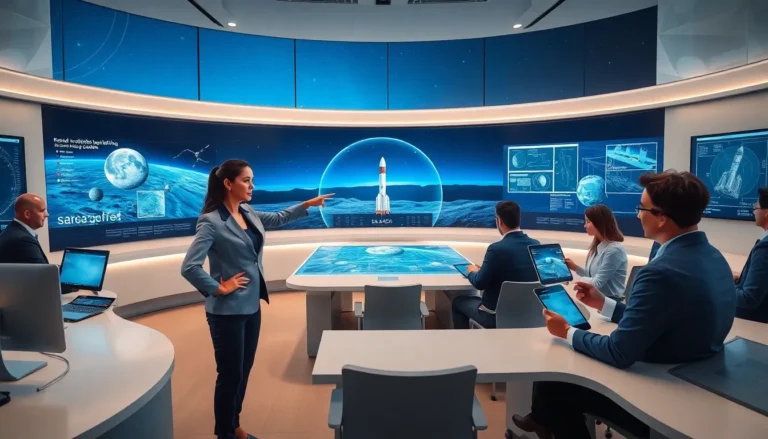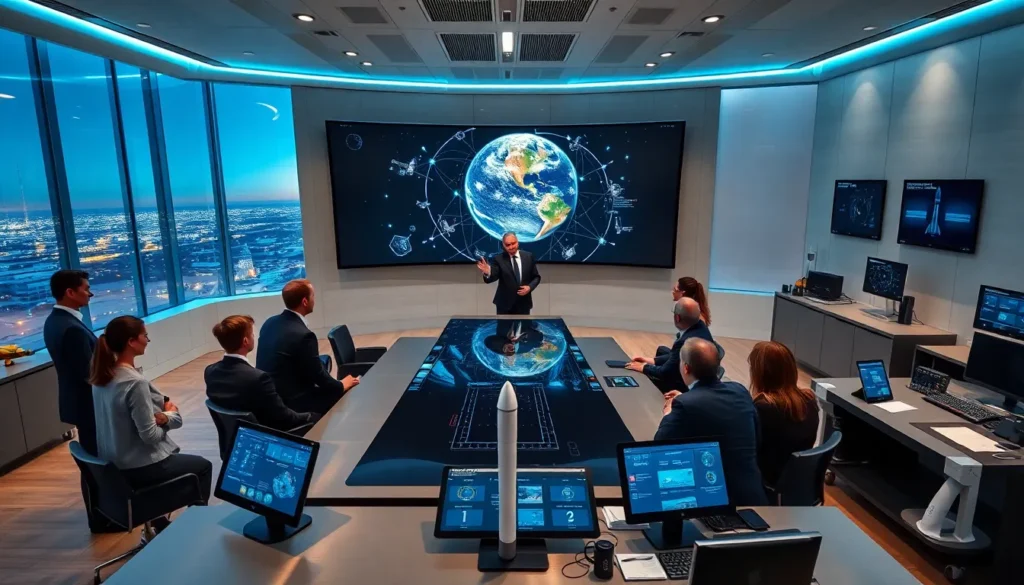
Space technology strategies define how nations and companies approach the next frontier. The race to explore, innovate, and commercialize space has never been more competitive. Governments invest billions into research programs. Private companies launch satellites at record rates. Universities develop new propulsion systems and materials. These space technology strategies shape everything from national security to climate monitoring. This article examines the current state of space technology, explores key strategic approaches, and identifies the challenges organizations face when planning for the cosmos.
Table of Contents
ToggleKey Takeaways
- Space technology strategies now prioritize sustainability, with debris mitigation and active removal programs becoming essential for long-term orbital viability.
- Public-private partnerships drive modern space development, combining government funding with commercial innovation to reduce costs and accelerate progress.
- Effective space programs operate on multi-decade timelines, requiring modular designs and risk management frameworks to adapt to technological and political changes.
- Emerging technologies like advanced propulsion, in-space manufacturing, and AI integration are reshaping space technology strategies for faster, more autonomous missions.
- Funding constraints, workforce shortages, and geopolitical tensions remain significant challenges that organizations must address when implementing space technology strategies.
The Current Landscape of Space Technology
The space industry has transformed dramatically over the past decade. Global spending on space programs exceeded $100 billion in 2024. The United States leads with NASA’s Artemis program, which aims to return humans to the Moon. China’s space agency has completed its Tiangong space station. The European Space Agency continues its Mars exploration efforts.
Private sector investment has changed the game. SpaceX reduced launch costs by 90% through reusable rocket technology. Blue Origin and Virgin Galactic push toward space tourism. Thousands of small satellites now orbit Earth, providing internet coverage and data collection services.
Space technology strategies now focus on sustainability. Debris mitigation has become a priority. Organizations track over 30,000 objects in orbit. Active debris removal programs are in development. The long-term viability of space operations depends on keeping orbital lanes clear.
International cooperation remains essential. The International Space Station serves as a model for collaboration. Multiple nations share resources, research, and costs. This partnership approach influences how new space technology strategies take shape across different programs.
Key Strategic Approaches for Space Missions
Successful space technology strategies share common elements. Mission planning requires clear objectives, realistic timelines, and adequate funding. Organizations must balance ambition with practical constraints.
Long-Term Vision Planning
Effective space programs operate on multi-decade timelines. The James Webb Space Telescope took 25 years from concept to deployment. Mars colonization plans span generations. Strategic planners must account for technological development, funding cycles, and political changes.
Modular and Scalable Design
Modern space technology strategies emphasize flexibility. Spacecraft use standardized components that can be upgraded or replaced. This approach reduces costs and allows missions to adapt to new discoveries. The Starlink satellite constellation demonstrates this principle, each generation improves upon the last.
Risk Management Frameworks
Space missions carry inherent dangers. Strategic approaches include redundant systems, extensive testing, and contingency planning. Organizations conduct failure mode analyses before launch. They prepare for equipment malfunctions, communication losses, and unexpected environmental conditions.
Data-Driven Decision Making
Space technology strategies rely on continuous data collection and analysis. Sensors monitor every aspect of spacecraft performance. Machine learning algorithms predict maintenance needs. This information shapes operational decisions and future mission designs.
Public-Private Partnerships in Space Development
The relationship between government agencies and commercial companies defines modern space technology strategies. Neither sector can achieve major goals alone. Each brings unique capabilities to the table.
NASA’s Commercial Crew Program illustrates this partnership model. The agency contracts with SpaceX and Boeing to transport astronauts to the International Space Station. Government provides funding and oversight. Companies deliver innovation and cost efficiency. This arrangement saves taxpayer money while accelerating capability development.
Private investment in space technology strategies has reached unprecedented levels. Venture capital firms invested over $15 billion in space startups between 2020 and 2024. These funds support everything from satellite manufacturing to asteroid mining research.
Government agencies benefit from commercial innovation. They gain access to new technologies without bearing full development costs. Companies benefit from guaranteed contracts and technical expertise. This symbiotic relationship drives progress faster than either party could manage independently.
Regulatory frameworks continue to evolve. The Federal Aviation Administration licenses commercial launches. The Federal Communications Commission manages spectrum allocation for satellites. International bodies coordinate orbital slot assignments. These regulations shape how space technology strategies unfold across the industry.
Emerging Technologies Shaping Space Exploration
Several breakthrough technologies will define the next generation of space technology strategies. Each offers solutions to current limitations while opening new possibilities.
Advanced Propulsion Systems
Ion drives and nuclear thermal propulsion promise faster travel times. Current chemical rockets take months to reach Mars. Advanced systems could cut that journey significantly. NASA and private companies actively test these alternatives.
In-Space Manufacturing
3D printing in microgravity enables on-demand part production. Astronauts can fabricate tools, replacement components, and even habitation structures. This capability reduces launch mass requirements and increases mission flexibility.
Artificial Intelligence Integration
AI systems manage spacecraft operations with increasing autonomy. They process sensor data, make navigation decisions, and respond to emergencies. Space technology strategies now incorporate AI at every level, from mission planning to real-time operations.
Quantum Communication
Quantum encryption promises secure communication across vast distances. China has demonstrated satellite-based quantum key distribution. This technology could protect sensitive space operations from interception.
These technologies require substantial investment and development time. Space technology strategies must account for maturation timelines and integration challenges. Early adoption carries risks, but waiting too long means falling behind competitors.
Challenges and Considerations for Implementation
Even the best space technology strategies face significant obstacles. Organizations must address these challenges to achieve their objectives.
Funding Constraints
Space programs compete with other priorities for limited resources. Government budgets fluctuate with political changes. Private investors expect returns within reasonable timeframes. Sustainable funding models remain difficult to establish.
Technical Limitations
Current technology cannot solve every problem. Radiation protection for long-duration missions needs improvement. Life support systems require greater efficiency. Propulsion technology must advance for deep space exploration. These gaps shape what space technology strategies can realistically accomplish.
International Competition and Cooperation
Geopolitical tensions affect space programs. The United States and China compete for lunar resources and technological leadership. Russia’s isolation following recent conflicts has disrupted partnerships. Organizations must balance competitive advantage with the benefits of collaboration.
Workforce Development
The space industry needs skilled engineers, scientists, and technicians. Educational pipelines struggle to meet demand. Experienced professionals retire faster than replacements emerge. Human capital constraints limit how quickly space technology strategies can be executed.
Environmental Considerations
Launch activities produce emissions and noise pollution. Satellite constellations affect astronomical observations. Space debris threatens operational spacecraft. Sustainable practices must be built into space technology strategies from the start.