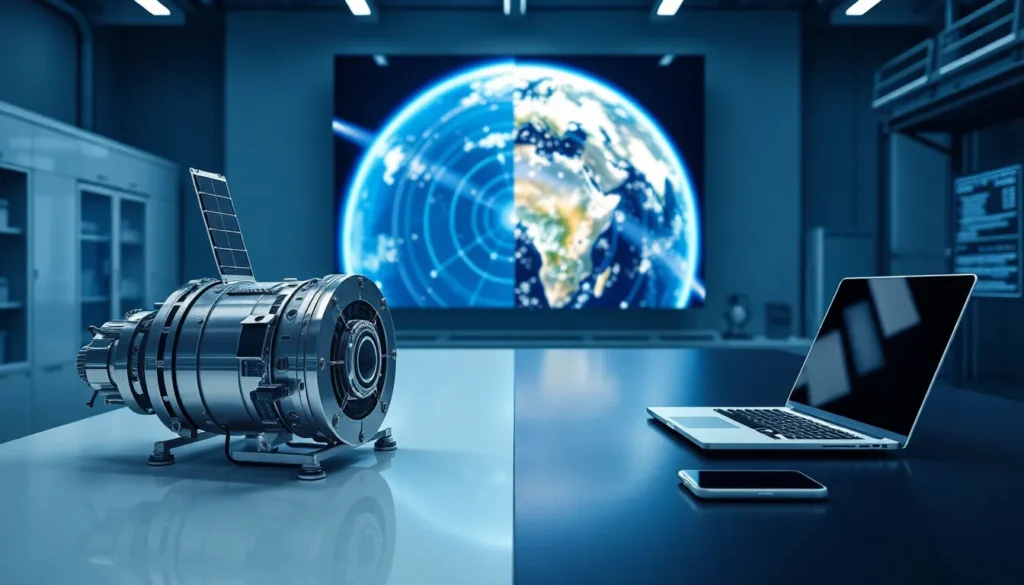
Space technology vs. traditional technology represents one of the most fascinating comparisons in modern engineering. Both fields push innovation forward, but they operate under vastly different conditions and constraints. Space technology must function in extreme environments, vacuum, radiation, and temperature swings that would destroy conventional electronics. Traditional technology, by contrast, benefits from Earth’s stable atmosphere and accessible maintenance.
This comparison matters because space technology increasingly shapes everyday life. GPS navigation, weather forecasting, and satellite internet all stem from space-grade innovations. Understanding the differences between space technology vs. traditional technology helps explain why certain devices cost millions while similar-looking products sell for hundreds.
Table of Contents
ToggleKey Takeaways
- Space technology vs. traditional technology differs primarily in design philosophy—space systems assume failure means total loss, while terrestrial tech allows for repairs and updates.
- Space technology must withstand extreme conditions including radiation, temperature swings of 500°F, and vacuum environments that would destroy conventional electronics.
- Development timelines vary dramatically: major satellite programs take 5-10 years, while new smartphone generations launch every 12-18 months.
- Many everyday innovations originated from space technology, including GPS navigation, memory foam, scratch-resistant lenses, and advanced water purification systems.
- The space technology vs. traditional technology cost gap exists because space components require radiation-hardening, years of environmental testing, and zero tolerance for post-launch failures.
- Private space companies are blurring the line between space and traditional technology, with satellite internet now competing directly with fiber and cellular infrastructure.
Defining Space Technology and Traditional Technology
Space technology refers to systems designed for operation beyond Earth’s atmosphere. This category includes satellites, spacecraft, launch vehicles, and the specialized components that power them. Every element must withstand launch forces, orbital mechanics, and the harsh space environment without human intervention for repairs.
Traditional technology encompasses devices built for terrestrial use. Smartphones, computers, industrial machinery, and consumer electronics fall into this group. These systems operate in controlled conditions with regular maintenance access and replaceable parts.
The core distinction between space technology vs. traditional technology lies in their design philosophy. Space engineers assume failure means total loss. A satellite can’t be fixed once deployed. Traditional tech designers expect periodic updates, repairs, and eventual replacement.
Materials selection highlights this difference clearly. Space technology requires radiation-hardened chips that cost thousands of dollars each. Traditional technology uses commercial-grade semiconductors at a fraction of that price. The same processor family might exist in both versions, one for satellites, one for laptops, with wildly different price tags and lifespans.
Testing protocols also diverge significantly. Space technology undergoes years of environmental simulation before launch. Engineers subject components to thermal vacuum chambers, vibration tables, and radiation exposure. Traditional technology passes through quality assurance in weeks or months, then ships to consumers.
Environmental and Operational Challenges
Space presents environmental challenges that simply don’t exist on Earth. Temperature swings between -250°F in shadow and +250°F in direct sunlight occur within minutes during orbital transitions. Space technology must handle these extremes continuously for years.
Radiation poses another critical threat. Without Earth’s magnetic field and atmosphere for protection, space technology faces constant bombardment from cosmic rays and solar particles. These can flip bits in computer memory, degrade solar panels, and damage sensitive instruments. Engineers use shielding, redundant systems, and specialized materials to address this space technology vs. traditional technology gap.
Vacuum conditions eliminate convective cooling. Heat can only escape through radiation, which is far less efficient. Space technology requires creative thermal management, heat pipes, radiators, and careful component placement. Traditional technology relies on fans, heat sinks, and ambient air that simply doesn’t exist in orbit.
Communication delays add operational complexity. A signal to Mars takes up to 24 minutes one way. Space technology must operate autonomously during these gaps. Traditional technology expects near-instant connectivity and human oversight.
Power generation differs fundamentally as well. Space technology depends primarily on solar panels and batteries, sometimes nuclear generators for deep-space missions. Traditional technology plugs into electrical grids or uses easily replaceable batteries. The space technology vs. traditional technology power comparison shows how location shapes every design decision.
Cost, Development, and Innovation Cycles
Development timelines reveal stark contrasts between space technology vs. traditional technology. A major satellite program takes 5-10 years from concept to launch. A new smartphone generation appears every 12-18 months. This difference stems from the impossibility of post-launch fixes.
Costs reflect these extended timelines. The James Webb Space Telescope cost approximately $10 billion over two decades of development. Traditional technology products reach consumers after investment measured in millions, occasionally billions for major platforms like new chip architectures.
Space technology paradoxically drives innovation while moving slowly. The need for absolute reliability pushes engineers to solve problems that traditional technology can avoid. Miniaturization efforts for satellites eventually benefit consumer electronics. Efficient solar cells developed for spacecraft now power rooftop installations.
Funding structures differ as well. Government agencies like NASA and ESA historically financed most space technology development. Traditional technology relies primarily on private investment seeking consumer market returns. This dynamic is shifting as private space companies gain prominence.
Testing costs illustrate the space technology vs. traditional technology expense gap. Qualifying a single component for space use might cost more than producing thousands of consumer-grade equivalents. Launch insurance, ground control infrastructure, and mission operations add further expenses that traditional technology never encounters.
Innovation cycles create interesting feedback loops. Traditional technology advances quickly, and some improvements eventually qualify for space use. Meanwhile, space technology breakthroughs filter down to consumer products over years or decades.
How Space Technology Drives Everyday Innovation
Space technology has produced countless technologies now embedded in daily life. Memory foam originated from NASA research on spacecraft seat cushioning. Scratch-resistant lenses came from helmet visor coatings developed for astronauts.
GPS represents the most obvious space technology vs. traditional technology crossover success. Military satellites designed for precision navigation now guide billions of smartphones and vehicles worldwide. This single system reshaped transportation, logistics, and social behavior.
Weather forecasting depends entirely on space technology. Satellites monitor storm systems, track climate patterns, and provide data that traditional technology processes into forecasts. Without orbital observation platforms, meteorology would rely on ground stations with limited coverage.
Medical imaging benefited from space technology research. Digital image processing developed for analyzing planetary photographs improved CT scans and MRI interpretation. Miniaturized sensors designed for spacecraft now monitor patients in hospitals.
Water purification systems used on the International Space Station influenced municipal treatment technologies. The need for closed-loop life support pushed filtration efficiency beyond what traditional technology had achieved.
Satellite internet represents current space technology vs. traditional technology convergence. Companies like SpaceX’s Starlink deploy thousands of satellites to provide broadband access in remote areas. This approach competes directly with traditional fiber and cellular infrastructure, showing how space technology increasingly enters consumer markets.